
General
- General
- Solutions
- Products
- Cases
- Technology
- News
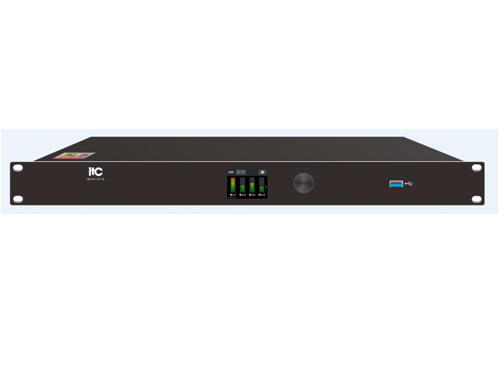
This high-performance audio processor features 12 analog balanced inputs and 12 analog balanced outputs. It integrates Dynamic Range Control (DRC) , Automatic Gain Control (AGC) , Affected Feedback (AFC) , Adaptive Noise Reduction (ANS) , AI Intelligent Noise Reduction, Adaptive Echo Cancellation (AEC) , and audio filters (GEQ, PEQ, crossover) . Primarily designed for professional sound reinforcement applications, it meets the needs of conference rooms, courtrooms, auditoriums, multi-purpose halls, performance venues, classrooms, and other similar venues.
* High-performance quad-core ARM CorteX-A53 processor (2.0GHz), The processor is a quad-core processor with 1 TOPS of computing power, 512MB of RAM, and 4GB of eMMC storage. 32bit/48kHz AD/DA, professional DSP processing, providing excellent high-quality sound.
* It features a 12-input, 12-output audio matrix, and the input sensitivity can be adjusted according to different audio sources. Each input supports 48V phantom power and can be individually configured to be turned on or off, offering flexibility and convenience.
* The input channels support preamplifiers, signal generators, expanders, compressors, equalizers (12-band parametric EQ, with optional 10/15/31-band graphic EQ adjustable, the graphic EQ can be used for individual bandwidth adjustment), ducks, AGC automatic gain control, AM automatic mixing (threshold type, gain-sharing type), AFC adaptive feedback cancellation, AEC echo cancellation, ANC noise cancellation, and audio matrix; the output channels support equalizers (16-band parametric EQ, with optional 10/15/31-band graphic EQ adjustable, the graphic EQ can be used for individual bandwidth adjustment), delays, crossovers, high-pass and low-pass filters, and limiters; based on the feedback detection threshold update method, it has frequency shift + notch filter combined feedback suppression, and can use 24 programmable notch points, which can be freely assigned dynamic/static points and switched automatically/manually.
* It features a ducking function to automatically duck the microphone when background music is played, and offers a variety of parameter settings for flexible on-site use.
* It features automatic gain control for microphones, which controls the dynamic range of the microphone's pickup signal to ensure consistent sound quality at different distances.
* It features intelligent mixing capabilities, including both gain-sharing mixing and automatic gate mixing. Individual input channels can be selected for participation in intelligent mixing, allowing users to choose the appropriate mixing mode based on different application scenarios. This effectively addresses pain points such as instability and feedback in the sound reinforcement system caused by multiple microphones operating simultaneously.
* It features equalizer functionality, offering both parametric and graphic equalizers. Each input channel offers a choice of 12-band parametric, 10-band, 15-band, or 31-band graphic equalizers, while each output channel offers a choice of 16-band parametric, 10-band, 15-band, or 31-band graphic equalizers. The parametric equalizer supports three types: high-mount, low-mount, and peak filter. The graphic equalizer supports single-point bandwidth adjustment.
* It features a frequency divider function, offering three filter types to choose from: Bessel, Linkwich-Rayleigh, and Butterworth. It also supports slope settings of 6/12/18/24/32/36/42/48dB/oct, and the filter is adjustable across the entire frequency band.
* It has an extender function, which expands the dynamic range of the signal and is used to eliminate the noise floor of the device.
* It has a compressor function, compressing the dynamic range of the signal and used to compress the size of the output signal.
* It has a limiter function to limit the size of the output signal and prevent the signal from being too large and damaging the sound reinforcement equipment.
* It features a delay function, providing a maximum delay adjustment of 2000ms, which can be used to adjust the delay of each output signal so that each audio signal remains synchronized when it reaches the listener's ears.
* It features echo cancellation for remote audio and video conferencing, eliminating echoes and increasing voice clarity. The echo cancellation can be adjusted to different levels depending on the size of the video conferencing room (small room, medium room, large room), with three options available. The noise reduction level is adjustable, with five options: 6dB, 12dB, 18dB, 24dB, and 30dB.
* It has a noise cancellation function, which can effectively eliminate environmental noise such as air conditioner noise and fan noise, and improve speech clarity. The steady-state noise reduction level can be adjusted to different levels according to the needs of the site (five levels are available: 6dB, 12dB, 18dB, 24dB and 30dB).
* It features feedback suppression and offers two processing solutions: notch filter and frequency shifter, effectively solving the acoustic feedback problem.
* Extremely low system processing latency, only 1.1ms.
* The panel features a 2-inch IPS true-color display that shows device network information, real-time levels, channel mute status, matrix mixing status, and other information.
* The panel has a USB interface, supports multimedia storage, and can store recordings or play them back.
* It supports scene presets, imports, and exports, and supports 8 scenes; scene switching can be completed within 0.1 seconds.
* It has a factory reset function.
* It has an RS-232 interface, which can be used to connect to external central control systems to achieve centralized management and control.
* It has an RS-485 interface, which can be connected to the central control system and the camera tracking system to realize the automatic camera tracking function.
* It features an 8-channel programmable GPIO control interface (with customizable inputs and outputs).
* Supports channel copy, paste, and joint control functions.
* Ethernet multipurpose data transmission and control port, which can support real-time management of single or multiple devices.
* The audio processor features cross-platform software that can run on Windows operating systems, domestic Galaxy Kylin desktop operating systems (Zhaoxin version), domestic Galaxy Kylin desktop operating systems (Feiteng version), macOS systems, Tongxin UOS, or Ubuntu desktop operating systems.
* The product offers different control methods, including PC client, mobile phone, Android tablet, iOS mobile phone, and iOS tablet. Users can simultaneously log in to the APP software and PC client to connect to the device and achieve data synchronization across multiple devices.
* It supports operation and control via Android phones and tablets via an app, including device login, scene switching, input/output, matrix routing, and channel settings.
* Supports automatic saving function in case of power failure.
* The rear panel features a 12-line audio Phoenix terminal balanced input interface (with 48V phantom power), a 12-line audio Phoenix terminal balanced output interface, a DIP switch, an RJ45 interface, an RS232 interface, an RS485 interface, eight programmable GPIO control interfaces, and a grounding post; the front panel features a 2.0-inch IPS true color display, an encoder knob, and a USB storage device interface.
* The equipment has a unified centralized control function, supporting centralized control of 65,535 devices through software.
* It features matrix gain adjustment, with adjustable gain for each input channel participating in the mixing, ranging from -72dB to 12dB.
* The device features an encoder knob and an IPS screen for controlling and configuring device mute, gain, and scene settings; the IPS screen can display IP address, input and output channel real-time levels.
* It has a device location function, and the client can locate similar devices in the local area network with one click. The located device will display the location information.
* The audio processor software can be integrated into a comprehensive conference audio management platform to achieve unified management of audio devices. The platform can scan the online status of digital conference hosts, audio processors, mixers, suppressors, and power amplifiers. It can also scan multiple online devices of the same product and display the device hardware name, hardware IP address, online and offline status information. It has the function of one-click uploading configuration information to the cloud or saving it locally for backup and one-click restoring configuration information.
* It supports central control functions, enabling gain adjustment, gain limiting, level bar query for each channel, and gain adjustment step value setting.
* It supports dual-machine hot backup; when the main machine fails, the backup machine automatically takes over the service, with a switchover time of less than 2 seconds, ensuring that the system can operate normally without manual intervention.
* It employs an AI wide-range learning algorithm for noise suppression, and offers three adjustable levels of AI voice noise reduction—strong, medium, and weak—to effectively eliminate non-steady-state noise such as clapping and tapping on a table, ensuring speech clarity and intelligibility (noise reduction capability up to 40dB).
* It features web page management capabilities, allowing users to download control software and adjust the gain of each channel via the web page.
* The product enables cloud-based collaboration with the operation and maintenance platform, supports automatic detection of OTA upgrade firmware packages after the device is connected to the network, and has complete remote firmware update capabilities.
|
Input channel |
12-channel balanced microphone/line, using bare wire interface terminals, balanced connection; |
|
Output channel |
12-channel balanced line output, using bare wire interface terminals, balanced connection; |
|
Processor |
48kHz sampling frequency, 64-bit DSP processor; 32-bit A/D and D/A converter. |
|
Phantom power |
DC 48V |
|
Frequency response |
20Hz~20KHz |
|
Total harmonic distortion + noise |
≤0.005% OUTPUT=18dBu/1kHz |
|
Signal-to-noise ratio |
≥112dB@1kHz 18dBu (A-weighted) |
|
Channel separation |
≥100dB@1kHz 18dBu (A-weighted) |
|
Noise reduction capability |
≥40dB |
|
Input impedance (balanced) |
Balance: 20KΩ |
|
Maximum output impedance (balanced) |
Balance: 100Ω |
|
Input range |
≤+18dBu |
|
Howling detection and suppression methods |
Fully automatic notch filter |
|
Notch filter |
24 (static and dynamic points can be configured) |
|
Q value range |
10-50 |
|
Frequency resolution |
1Hz |
|
Howling searching for time |
0.1–0.5S |
|
FFT length |
1024 |
|
Transmission gain |
4-10dB |
|
System gain |
0dB |
|
Frequency divider |
It features three types of high-pass and low-pass filters: Butterworth, Bessel, and Linkwich-Rayleigh. |
|
Display |
2-inch IPS true-color display with a resolution of 320*240 |
|
Power supply range |
AC 110V-240V 50-60Hz |
|
Power consumption |
≤40W |
|
Operating temperature |
-10℃~+45℃ |
|
relative humidity |
20%–80% relative humidity, no condensation |
|
Cool down |
Forced cooling by fans |
|
Product dimensions (L×D×H) |
484×258.2×56.5mm |
|
Net weight |
3.1kg |
|
Modular/digital dynamic range |
116dB |
|
Digital/modal dynamic range |
120dB |
Please leave a message if necessary, we will contact you as soon as possible!